Platform comparison
| Platform | YES odds | NO odds | Fee | KYC | Settlement | |
|---|---|---|---|---|---|---|
Who Will Win Pick polygram.ink |
0% | 100% | 0% (USDC on-chain) | No-KYC up to $1,500 | USDC, auto via UMA oracle | Open on Who Will Win → |
Polymarket polymarket.com |
0% | 100% | 0% | Geo-blocked in US/UK/EU | USDC, on-chain | Open on Who Will Win → |
Kalshi kalshi.com |
— | — | Up to 7% per trade | US-only, KYC required | USD | Open on Who Will Win → |
Betfair Exchange betfair.com |
— | — | 2-5% commission | Full KYC from first trade | GBP / EUR | Open on Who Will Win → |
Manifold Markets manifold.markets |
— | — | Play-money (mana) | None — play-money | Mana (no cash-out) | Open on Who Will Win → |
Live odds for Polymarket-based markets come from the Polygon order book. Non-Polymarket venues show attributes only; clicking any row opens the market on Who Will Win.
Active sub-markets
Market context
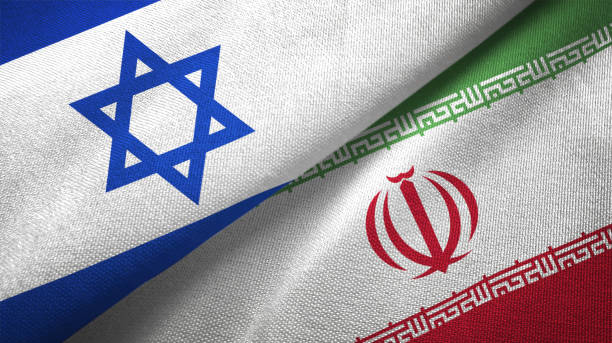
Israel and Iran would need to move from today’s de-escalation talk to a durable, explicit end to hostilities before 31 May 2026. The market’s **0% YES** implies traders see that as a near-impossible outcome, which makes the favourite the **No** side by a wide margin. The main value question is not whether tensions can ease, but whether any text produced in the window will clearly say the military conflict is permanently over, rather than merely paused or managed.
The historical read is that Middle East crisis markets usually pay up on **announcements**, then fade when the language turns into ceasefires, memoranda, or staged negotiations. Similar processes in other Iran-related diplomacy have often started with broad understandings and technical follow-ups, not a single final settlement; the 2015 nuclear accord took months of negotiation and was about constraints and verification, not a mutual peace deal with an outright end to hostilities.[7] On that basis, the consensus view is that a genuine Israel-Iran peace treaty is a long-shot headline event, and any contrarian case depends on the market underpricing a rapid political breakthrough.
Near-term catalysts are whether the current June 2026 Iran-related talks harden into a signed document, and whether that document explicitly covers Israel, not just U.S.-Iran disengagement. Recent reporting says a 14-point memorandum on ending conflict and reopening the Strait of Hormuz was being prepared, with a formal signing ceremony planned in Geneva on 19 June, but the language described is still interim and negotiation-heavy rather than a final Israel-Iran peace settlement.[1][4] Traders should watch for the exact signing text, any reference to “permanent” cessation of military operations between Israel and Iran, and whether regional dependencies — especially ceasefire enforcement, sanctions relief, and nuclear talks — are actually resolved in one package.[1][2][4]
Methodology
This page reviews Israel x Iran permanent peace deal by 2026? across five venues. We show live odds for Polymarket-based markets (sourced from the Polygon order book); for other venues we list platform attributes, since the comparable contracts are not exposed via a public API on every venue. Every CTA points at Who Will Win — the application we operate, where you trade directly against the Polymarket order book at 0% fees.
Resolution & payout
At resolution the UMA oracle takes over: a proposer posts the outcome with a bond, any token holder can dispute within two hours. Without dispute the result is accepted and the smart contract distributes USDC instantly.
On Kalshi (CFTC-regulated) resolution runs through their in-house clearing engine in USD. Betfair Exchange settles after match end in the account's local currency. Manifold pays no cash — only its in-platform "mana" currency.
FAQ
- Is this market available outside the US?
- Who Will Win is available in most jurisdictions where Polymarket isn't directly accessible. Polymarket itself is geo-blocked in the US/UK/EU. Always check local regulations.
- How does resolution work?
- Through the UMA Optimistic Oracle on Polygon: a proposer submits the outcome, a two-hour challenge window opens, and USDC payouts settle automatically once the result is final.
- What's the difference between YES and NO shares?
- A YES share pays $1.00 if the event happens, $0 otherwise. A NO share pays $1.00 if the event doesn't happen. The market price between 0¢ and 100¢ is the implied probability.
- What does it cost to trade on Who Will Win?
- Zero. Who Will Win routes every order to the live Polymarket order book; the only cost is the Polygon network fee, typically under $0.01 per transaction.
- How reliable are the quoted odds?
- The YES/NO percentages are the live mid-prices of the Polymarket order book. On deep markets they move every few seconds; on thinner ones you'll see short plateaus.
%22%2F%3E%3Cpath%20d%3D%22M%206%2066%20A%2026%2026%200%200%201%2058%2066%22%20fill%3D%22%23E6B98D%22%20opacity%3D%220.9%22%2F%3E%3Ccircle%20cx%3D%2232%22%20cy%3D%2226%22%20r%3D%2222%22%20fill%3D%22%23F5CBA7%22%2F%3E%3Crect%20x%3D%2214%22%20y%3D%224%22%20width%3D%2236%22%20height%3D%228%22%20rx%3D%224%22%20fill%3D%22%23facc15%22%2F%3E%3C%2Fsvg%3E) and
and%22%2F%3E%3Cpath%20d%3D%22M%206%2066%20A%2026%2026%200%200%201%2058%2066%22%20fill%3D%22%23E6B98D%22%20opacity%3D%220.9%22%2F%3E%3Ccircle%20cx%3D%2232%22%20cy%3D%2226%22%20r%3D%2222%22%20fill%3D%22%23F5CBA7%22%2F%3E%3Crect%20x%3D%2210%22%20y%3D%224%22%20width%3D%2244%22%20height%3D%2214%22%20rx%3D%227%22%20fill%3D%22%23facc15%22%20opacity%3D%220.9%22%2F%3E%3Crect%20x%3D%228%22%20%20y%3D%2218%22%20width%3D%228%22%20%20height%3D%2218%22%20rx%3D%224%22%20fill%3D%22%23facc15%22%20opacity%3D%220.7%22%2F%3E%3Crect%20x%3D%2248%22%20y%3D%2218%22%20width%3D%228%22%20%20height%3D%2218%22%20rx%3D%224%22%20fill%3D%22%23facc15%22%20opacity%3D%220.7%22%2F%3E%3C%2Fsvg%3E)
Trade Israel x Iran permanent peace deal by 2026? on Who Will Win
Live order book, 0% fees, USDC settlement in seconds.
Trade on Who Will Win →