Platform comparison
| Platform | YES odds | NO odds | Fee | KYC | Settlement | |
|---|---|---|---|---|---|---|
Polymarket (via Who Will Win) Pick polygram.ink (preferred broker) |
65% | 35% | 0% (USDC on-chain) | No-KYC up to $1,500 | USDC, auto via UMA oracle | Live odds → |
Polymarket (direct) polymarket.com |
65% | 35% | 0% | Geo-blocked in US/UK/EU | USDC, on-chain | Live odds → |
Kalshi kalshi.com |
— | — | Up to 7% per trade | US-only, KYC required | USD | Live odds → |
Betfair Exchange betfair.com |
— | — | 2-5% commission | Full KYC from first trade | GBP / EUR | Live odds → |
Manifold Markets manifold.markets |
— | — | Play-money (mana) | None — play-money | Mana (no cash-out) | Live odds → |
Outcome probabilities
Current market-implied probability for each outcome, from the live order book.
| Outcome | Probability |
|---|---|
| December 31 | 65% |
| July 31 | 9% |
| October 31 | 0% |
| December 31 | 0% |
| November 30 | 0% |
| March 31, 2026 | 0% |
| January 31 | 0% |
| February 28 | 0% |
| June 30 | 0% |
Market context
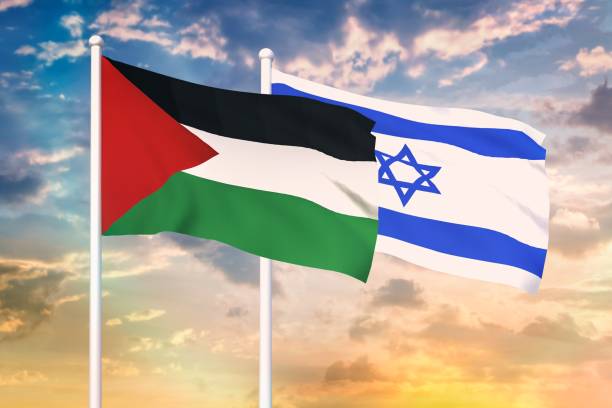
The underlying event is whether Israel and Hamas publicly reach an official agreement on the ceasefire’s second phase before year-end, with the market currently pricing **65% YES**. That makes **YES the favourite**, but not an overwhelming one; the spread still leaves room for a **contrarian NO case** if talks keep producing procedural steps without a formal mutual announcement.
The historical read is that Gaza ceasefire follow-through has repeatedly stalled once the harder issues arrive. Phase two has long centred on the most difficult trade-offs — Israeli withdrawal, Hamas disarmament, security enforcement, and who governs Gaza — and recent reporting has described the process as still “stalled” or making little progress[5][1]. Comparable ceasefire frameworks often generate headline agreements on principles, then slip on implementation, which matters here because the market needs a *publicly announced mutual agreement*, not just mediation, draft language, or unilateral statements. That argues for caution around the consensus price: 65% already assumes meaningful progress, so the cleaner value angle is whether the market is overstating the chance of a formalised second-phase deal rather than another partial or ambiguous announcement.
The near-term catalysts are diplomatic rather than military: Cairo talks, Egyptian and Israeli security contacts, and any statement from Hamas, Israel, or US mediators. Reuters reported on 30 July that Trump said a deal had been reached to disarm Hamas, while Israeli backing remained uncertain, which is exactly the sort of headline that can move this market without necessarily settling it[4]. Xinhua also reported on 31 July that a Hamas official said an agreement had been reached and that an official statement would follow, with Egyptian state TV saying Hamas and Palestinian factions had agreed a plan for implementing phase two[6]. Until there is a clear joint read-out from both sides, the market can still misprice a sequence of partial signals as if they were the final step.
Methodology
Methodologically we separate two layers: the live probability (Polymarket mid-price) and the platform attributes (fee, KYC, settlement currency, payment rails). That keeps the comparison honest — a single canonical probability across the row, with the venue-by-venue trade-offs spelt out in the columns next to it.
Resolution & payout
Settlement runs on-chain. Polymarket's contract logic separates YES and NO shares as conditional tokens; at resolution the winning share lifts to $1.00 and the losing one to $0. The outcome input comes from the UMA Optimistic Oracle, which secures against bad resolution with a bond + dispute window.
Once finalised, the smart contract pays USDC to the holders' wallets within minutes — no withdrawal fees beyond Polygon network gas. Kalshi settles in USD via CFTC clearance, Betfair in account currency net of commission, Manifold in play-money mana with no cash-out.
FAQ
- Is this market available outside the US?
- Polymarket itself is geo-blocked in the US/UK/EU. Always check the legal status of prediction markets in your jurisdiction before trading.
- What does Polymarket cost to trade?
- Polymarket itself charges 0% — the only cost is the Polygon network fee, typically under $0.01 per transaction. Off-chain venues like Kalshi or Betfair charge 2-7% commission.
- How fast are USDC deposits?
- Polygon credits deposits after 12 confirmations — usually under 30 seconds. Withdrawals follow the same path and land back in your wallet within minutes.
- Do I need to KYC for this market?
- On Polymarket directly, no — it's wallet-based. Intermediary brokers like Who Will Win trigger KYC only above $1,500 of lifetime trading volume; under that you trade pseudonymously with a single wallet address.
- How reliable are the quoted odds?
- The YES/NO percentages are the live mid-prices of the Polymarket order book. On deep markets they move every few seconds; on thinner ones you'll see short plateaus.
%22%2F%3E%3Cpath%20d%3D%22M%206%2066%20A%2026%2026%200%200%201%2058%2066%22%20fill%3D%22%23E6B98D%22%20opacity%3D%220.9%22%2F%3E%3Ccircle%20cx%3D%2232%22%20cy%3D%2226%22%20r%3D%2222%22%20fill%3D%22%23F5CBA7%22%2F%3E%3Crect%20x%3D%2214%22%20y%3D%224%22%20width%3D%2236%22%20height%3D%228%22%20rx%3D%224%22%20fill%3D%22%23facc15%22%2F%3E%3C%2Fsvg%3E) and
and%22%2F%3E%3Cpath%20d%3D%22M%206%2066%20A%2026%2026%200%200%201%2058%2066%22%20fill%3D%22%23E6B98D%22%20opacity%3D%220.9%22%2F%3E%3Ccircle%20cx%3D%2232%22%20cy%3D%2226%22%20r%3D%2222%22%20fill%3D%22%23F5CBA7%22%2F%3E%3Crect%20x%3D%2210%22%20y%3D%224%22%20width%3D%2244%22%20height%3D%2214%22%20rx%3D%227%22%20fill%3D%22%23facc15%22%20opacity%3D%220.9%22%2F%3E%3Crect%20x%3D%228%22%20%20y%3D%2218%22%20width%3D%228%22%20%20height%3D%2218%22%20rx%3D%224%22%20fill%3D%22%23facc15%22%20opacity%3D%220.7%22%2F%3E%3Crect%20x%3D%2248%22%20y%3D%2218%22%20width%3D%228%22%20%20height%3D%2218%22%20rx%3D%224%22%20fill%3D%22%23facc15%22%20opacity%3D%220.7%22%2F%3E%3C%2Fsvg%3E)
Trade Israel x Hamas Ceasefire Phase II by 2026? on Who Will Win
Live order book, 0% fees, USDC settlement in seconds.
Open live market →