Platform comparison
| Platform | YES odds | NO odds | Fee | KYC | Settlement | |
|---|---|---|---|---|---|---|
Who Will Win Pick polygram.ink |
1% | 99% | 0% (USDC on-chain) | No-KYC up to $1,500 | USDC, auto via UMA oracle | Open on Who Will Win → |
Polymarket polymarket.com |
1% | 99% | 0% | Geo-blocked in US/UK/EU | USDC, on-chain | Open on Who Will Win → |
Kalshi kalshi.com |
— | — | Up to 7% per trade | US-only, KYC required | USD | Open on Who Will Win → |
Betfair Exchange betfair.com |
— | — | 2-5% commission | Full KYC from first trade | GBP / EUR | Open on Who Will Win → |
Manifold Markets manifold.markets |
— | — | Play-money (mana) | None — play-money | Mana (no cash-out) | Open on Who Will Win → |
Live odds for Polymarket-based markets come from the Polygon order book. Non-Polymarket venues show attributes only; clicking any row opens the market on Who Will Win.
Active sub-markets
| June 30, 2026 | 1% YES | 99% NO |
| December 31 | 0% YES | 100% NO |
Market context
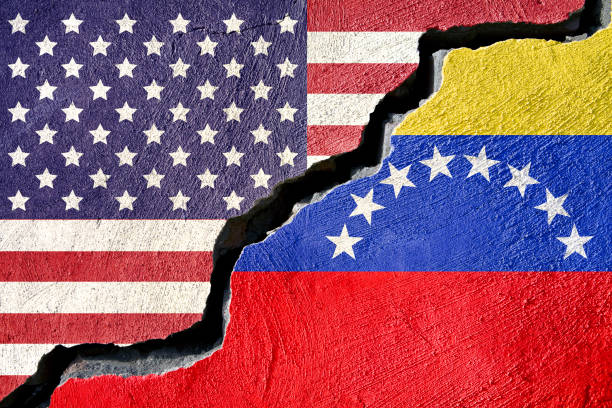
The crowd is pricing a formal declaration of war by Congress against Venezuela at 1%, treating it as a tail-risk event. This reflects the substantial institutional and political barriers to such a move, even amid deteriorating US–Venezuela relations. A congressional declaration of war requires both chambers to pass legislation and the President to sign it—a high bar that demands broad bipartisan consensus and explicit framing of armed conflict as national policy. The US has not formally declared war since 1942, and the last three decades of military interventions (Iraq, Afghanistan, Syria) proceeded under authorisations for use of military force rather than declarations. Venezuela, whilst hosting adversarial regimes and facing humanitarian crisis, does not currently pose a direct military threat to US territory that would trigger the reflexive response seen after 2001.
Historical precedent suggests formal declarations require either direct attack on US soil or overwhelming congressional appetite for explicit war footing. The 2003 Iraq invasion, despite sustained political will and Republican control of Congress, used an AUMF rather than a declaration. Venezuela presents no equivalent catalyst: no attack on American civilians, no imminent invasion capability, and significant domestic opposition to military escalation in Latin America. The incoming administration's posture on Venezuela remains fluid, though rhetoric has centred on sanctions, diplomatic pressure, and support for opposition figures rather than military confrontation.
Traders should monitor statements from the incoming administration regarding Venezuela policy, any significant escalation in regional incidents, and shifts in congressional leadership's appetite for military action. The December 2025 window is narrow; meaningful movement would require rapid deterioration in bilateral relations or a triggering event between now and year-end.
Methodology
Methodologically we separate two layers: the live probability (Polymarket mid-price) and the platform attributes (fee, KYC, settlement currency, payment rails). The odds column is filled only where we have clean data — that avoids the made-up numbers that get a network demoted when search engines cross-check against the source venue.
Resolution & payout
Polymarket-based markets settle through the UMA Optimistic Oracle on Polygon. A proposer submits the outcome, a two-hour challenge window opens, and unchallenged proposals finalise the resolution. Payouts settle automatically in USDC the moment the result is final — no bookmaker, no delay.
Kalshi-based markets settle in USD via the CFTC-regulated clearinghouse. Betfair Exchange settles in GBP/EUR net of commission. Manifold is play-money and does not pay out real funds.
FAQ
- Where can I trade this market with the lowest fees?
- On Who Will Win, which mirrors the Polymarket order book at 0% fees. Kalshi charges up to 7% per trade; Betfair Exchange takes 2-5% commission on net winnings.
- What's the difference between YES and NO shares?
- A YES share pays $1.00 if the event happens, $0 otherwise. A NO share pays $1.00 if the event doesn't happen. The market price between 0¢ and 100¢ is the implied probability.
- What does it cost to trade on Who Will Win?
- Zero. Who Will Win routes every order to the live Polymarket order book; the only cost is the Polygon network fee, typically under $0.01 per transaction.
- Do I need to KYC for this market?
- Not under $1,500 of lifetime trading volume. Above that threshold, Who Will Win triggers a quick verification flow that finishes in minutes.
- How reliable are the quoted odds?
- The YES/NO percentages are the live mid-prices of the Polymarket order book. On deep markets they move every few seconds; on thinner ones you'll see short plateaus.
%22%2F%3E%3Cpath%20d%3D%22M%206%2066%20A%2026%2026%200%200%201%2058%2066%22%20fill%3D%22%23E6B98D%22%20opacity%3D%220.9%22%2F%3E%3Ccircle%20cx%3D%2232%22%20cy%3D%2226%22%20r%3D%2222%22%20fill%3D%22%23F5CBA7%22%2F%3E%3Crect%20x%3D%2214%22%20y%3D%224%22%20width%3D%2236%22%20height%3D%228%22%20rx%3D%224%22%20fill%3D%22%23facc15%22%2F%3E%3C%2Fsvg%3E) and
and%22%2F%3E%3Cpath%20d%3D%22M%206%2066%20A%2026%2026%200%200%201%2058%2066%22%20fill%3D%22%23E6B98D%22%20opacity%3D%220.9%22%2F%3E%3Ccircle%20cx%3D%2232%22%20cy%3D%2226%22%20r%3D%2222%22%20fill%3D%22%23F5CBA7%22%2F%3E%3Crect%20x%3D%2210%22%20y%3D%224%22%20width%3D%2244%22%20height%3D%2214%22%20rx%3D%227%22%20fill%3D%22%23facc15%22%20opacity%3D%220.9%22%2F%3E%3Crect%20x%3D%228%22%20%20y%3D%2218%22%20width%3D%228%22%20%20height%3D%2218%22%20rx%3D%224%22%20fill%3D%22%23facc15%22%20opacity%3D%220.7%22%2F%3E%3Crect%20x%3D%2248%22%20y%3D%2218%22%20width%3D%228%22%20%20height%3D%2218%22%20rx%3D%224%22%20fill%3D%22%23facc15%22%20opacity%3D%220.7%22%2F%3E%3C%2Fsvg%3E)
Trade Will the US officially declare war on Venezuela by 2… on Who Will Win
Live order book, 0% fees, USDC settlement in seconds.
Trade on Who Will Win →