Platform comparison
| Platform | YES odds | NO odds | Fee | KYC | Settlement | |
|---|---|---|---|---|---|---|
Polymarket (via Who Will Win) Pick polygram.ink (preferred broker) |
50% | 50% | 0% (USDC on-chain) | No-KYC up to $1,500 | USDC, auto via UMA oracle | Live odds → |
Polymarket (direct) polymarket.com |
50% | 50% | 0% | Geo-blocked in US/UK/EU | USDC, on-chain | Live odds → |
Kalshi kalshi.com |
— | — | Up to 7% per trade | US-only, KYC required | USD | Live odds → |
Betfair Exchange betfair.com |
— | — | 2-5% commission | Full KYC from first trade | GBP / EUR | Live odds → |
Manifold Markets manifold.markets |
— | — | Play-money (mana) | None — play-money | Mana (no cash-out) | Live odds → |
Outcome probabilities
Current market-implied probability for each outcome, from the live order book.
| Outcome | Probability |
|---|---|
| Player G | 50% |
| Player H | 50% |
| Player Q | 50% |
| Player R | 50% |
| Player AA | 50% |
| Player AB | 50% |
| Player AG | 50% |
| Player AO | 50% |
| Player AP | 50% |
| Player A | 50% |
| Player B | 50% |
| Player I | 50% |
| Player J | 50% |
| Player K | 50% |
| Player L | 50% |
| Player S | 50% |
| Player T | 50% |
| Player U | 50% |
| Player V | 50% |
| Player AC | 50% |
| Player AD | 50% |
| Player AE | 50% |
| Player AF | 50% |
| Player AH | 50% |
| Player AI | 50% |
| Player AQ | 50% |
| Player AR | 50% |
| Player AS | 50% |
| Player AT | 50% |
| Player E | 50% |
| Player F | 50% |
| Player O | 50% |
| Player P | 50% |
| Player Y | 50% |
| Player Z | 50% |
| Player AK | 50% |
| Player AM | 50% |
| Player AN | 50% |
| Player AW | 50% |
| Player AX | 50% |
| Player C | 50% |
| Player D | 50% |
| Player M | 50% |
| Player N | 50% |
| Player W | 50% |
| Player X | 50% |
| Player AJ | 50% |
| Player AL | 50% |
| Player AU | 50% |
| Player AV | 50% |
| Other | 50% |
| Cameron Boozer | 22% |
| AJ Dybantsa | 18% |
| Caleb Wilson | 18% |
| Darryn Peterson | 16% |
| Darius Acuff Jr. | 12% |
| Mikel Brown Jr. | 6% |
| Keaton Wagler | 5% |
| Yaxel Lendeborg | 2% |
| Brayden Burries | 1% |
| Nate Ament | 1% |
| Joshua Jefferson | 0% |
| Kingston Flemings | 0% |
| Morez Johnson Jr. | 0% |
| Hannes Steinbach | 0% |
| Christian Anderson | 0% |
| Allen Graves | 0% |
| Cameron Carr | 0% |
| Alex Karaban | 0% |
| Koa Peat | 0% |
| Bennett Stirtz | 0% |
| Karim López | 0% |
| Sergio De Larrea | 0% |
| Tarris Reed Jr. | 0% |
| Dailyn Swain | 0% |
| Jayden Quaintance | 0% |
| Zuby Ejiofor | 0% |
| Aday Mara | 0% |
| Ebuka Okorie | 0% |
| Labaron Philon Jr. | 0% |
| Chris Cenac Jr. | 0% |
Market context
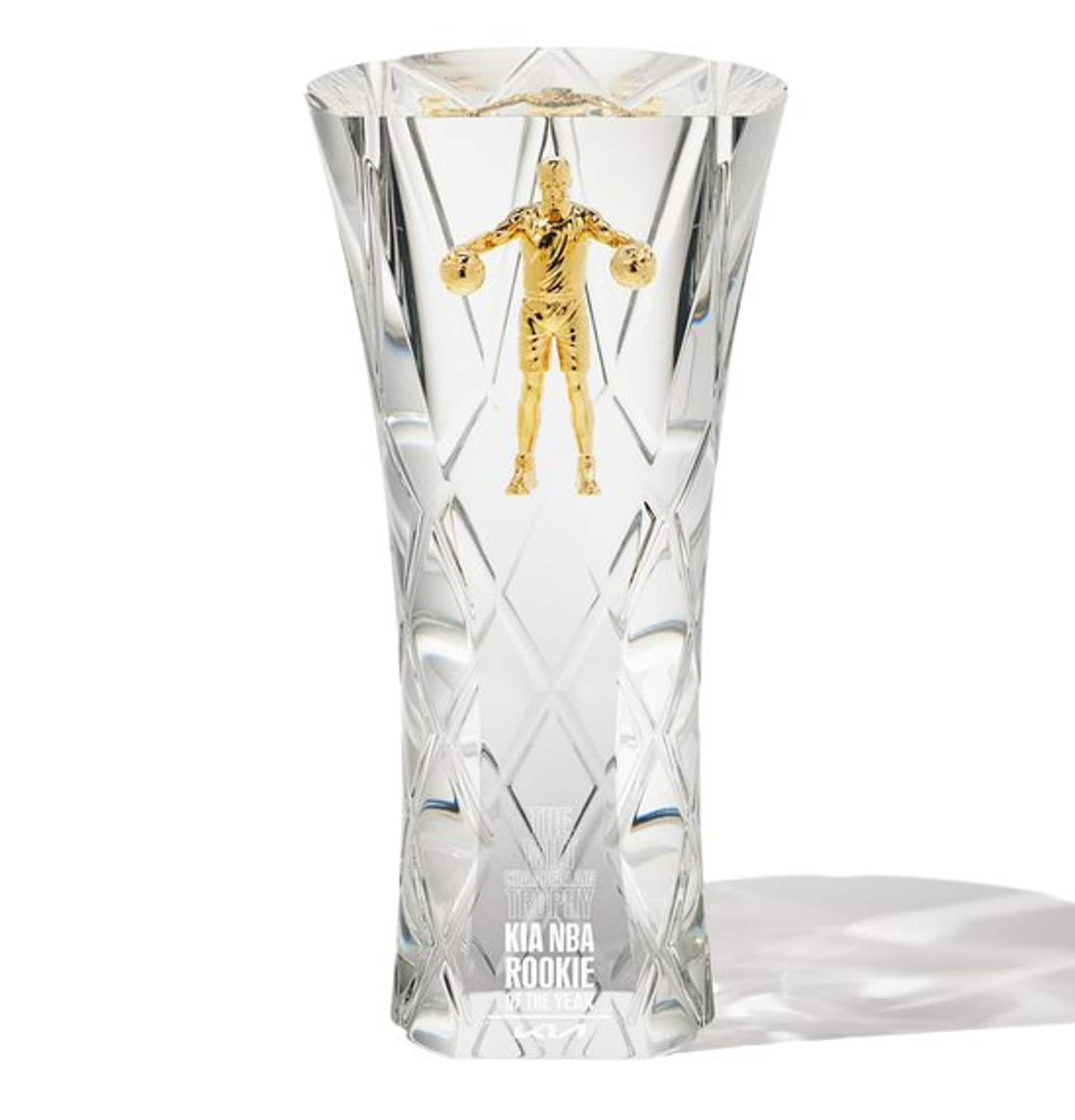
The 2026–27 NBA Rookie of the Year award will be decided by the player who delivers the most outstanding performance during the upcoming regular season, with the resolution occurring in May 2027. Current crowd-implied probability sits at 0% YES, reflecting a market that has not yet assigned value to any specific contender, while consensus at sportsbooks heavily favours Cameron Boozer, the third overall pick, over top selections AJ Dybantsa and Darryn Peterson. Boozer opened at +250 odds, eclipsing Dybantsa and Peterson at +400, with Arkansas guard Darius Acuff trailing closely at +450, suggesting the value spot may lie with underdogs who can outperform their draft position in early training camp reports.
Historically, third picks have frequently won Rookie of the Year by leveraging superior development or immediate team roles, as seen when Bojan Bogdanović or similar mid-tier prospects surged past lottery picks who faced injury or roster instability. This pattern frames the current 0% probability as a premature dismissal of Boozer’s potential, where contrarian angles might favour Acuff or fourth pick Caleb Wilson if Dybantsa’s transition to the NBA falters. Traders should monitor the 2026 draft prospect announcements, summer league schedules, and early roster dependencies, particularly any news on Dybantsa’s health or team fit, as recent Yahoo Sports coverage highlights Boozer’s immediate favourite status despite his lower draft slot, indicating a critical dependency on early-season performance metrics.
The market’s zero probability implies a lack of confidence in any single outcome, yet the sportsbook odds reveal a clear favourite in Boozer, with Wilson and Acuff offering potential value if the consensus overestimates Dybantsa’s readiness. Watch for summer league debut dates, team practice reports, and any injury updates from the 2026 draft class, as these catalysts will determine whether the market corrects its initial dismissal of mid-tier prospects. The resolution window ending 31 May 2027 ensures that only regular-season performance counts, making early-season form the sole dependency for a successful prediction.
Methodology
This page is a comparison snapshot: one live quote, four reference venues with their key attributes, and a single execution path — every trade button routes to Who Will Win, which mirrors the Polymarket order book directly.
Resolution & payout
At resolution the UMA oracle takes over: a proposer posts the outcome with a bond, any token holder can dispute within two hours. Without dispute the result is accepted and the smart contract distributes USDC instantly.
On Kalshi (CFTC-regulated) resolution runs through their in-house clearing engine in USD. Betfair Exchange settles after match end in the account's local currency. Manifold pays no cash — only its in-platform "mana" currency.
FAQ
- Where can I trade this market with the lowest fees?
- Polymarket is geo-blocked in the US/UK/EU. The easiest 0%-fee broker into the same order book is Who Will Win. Kalshi charges up to 7% per trade; Betfair Exchange takes 2-5% commission on net winnings.
- Is this market available outside the US?
- Polymarket itself is geo-blocked in the US/UK/EU. Always check the legal status of prediction markets in your jurisdiction before trading.
- What's the difference between YES and NO shares?
- A YES share pays $1.00 if the event happens, $0 otherwise. A NO share pays $1.00 if the event doesn't happen. The market price between 0¢ and 100¢ is the implied probability.
- What does Polymarket cost to trade?
- Polymarket itself charges 0% — the only cost is the Polygon network fee, typically under $0.01 per transaction. Off-chain venues like Kalshi or Betfair charge 2-7% commission.
- Do I need to KYC for this market?
- On Polymarket directly, no — it's wallet-based. Intermediary brokers like Who Will Win trigger KYC only above $1,500 of lifetime trading volume; under that you trade pseudonymously with a single wallet address.
%22%2F%3E%3Cpath%20d%3D%22M%206%2066%20A%2026%2026%200%200%201%2058%2066%22%20fill%3D%22%23E6B98D%22%20opacity%3D%220.9%22%2F%3E%3Ccircle%20cx%3D%2232%22%20cy%3D%2226%22%20r%3D%2222%22%20fill%3D%22%23F5CBA7%22%2F%3E%3Crect%20x%3D%2214%22%20y%3D%224%22%20width%3D%2236%22%20height%3D%228%22%20rx%3D%224%22%20fill%3D%22%23facc15%22%2F%3E%3C%2Fsvg%3E) and
and%22%2F%3E%3Cpath%20d%3D%22M%206%2066%20A%2026%2026%200%200%201%2058%2066%22%20fill%3D%22%23E6B98D%22%20opacity%3D%220.9%22%2F%3E%3Ccircle%20cx%3D%2232%22%20cy%3D%2226%22%20r%3D%2222%22%20fill%3D%22%23F5CBA7%22%2F%3E%3Crect%20x%3D%2210%22%20y%3D%224%22%20width%3D%2244%22%20height%3D%2214%22%20rx%3D%227%22%20fill%3D%22%23facc15%22%20opacity%3D%220.9%22%2F%3E%3Crect%20x%3D%228%22%20%20y%3D%2218%22%20width%3D%228%22%20%20height%3D%2218%22%20rx%3D%224%22%20fill%3D%22%23facc15%22%20opacity%3D%220.7%22%2F%3E%3Crect%20x%3D%2248%22%20y%3D%2218%22%20width%3D%228%22%20%20height%3D%2218%22%20rx%3D%224%22%20fill%3D%22%23facc15%22%20opacity%3D%220.7%22%2F%3E%3C%2Fsvg%3E)
Trade NBA: 2026-27 Rookie of the Year on Who Will Win
Live order book, 0% fees, USDC settlement in seconds.
Open live market →