Platform comparison
| Platform | YES odds | NO odds | Fee | KYC | Settlement | |
|---|---|---|---|---|---|---|
Who Will Win Pick polygram.ink |
0% | 100% | 0% (USDC on-chain) | No-KYC up to $1,500 | USDC, auto via UMA oracle | Open on Who Will Win → |
Polymarket polymarket.com |
0% | 100% | 0% | Geo-blocked in US/UK/EU | USDC, on-chain | Open on Who Will Win → |
Kalshi kalshi.com |
— | — | Up to 7% per trade | US-only, KYC required | USD | Open on Who Will Win → |
Betfair Exchange betfair.com |
— | — | 2-5% commission | Full KYC from first trade | GBP / EUR | Open on Who Will Win → |
Manifold Markets manifold.markets |
— | — | Play-money (mana) | None — play-money | Mana (no cash-out) | Open on Who Will Win → |
Live odds for Polymarket-based markets come from the Polygon order book. Non-Polymarket venues show attributes only; clicking any row opens the market on Who Will Win.
Active sub-markets
Market context
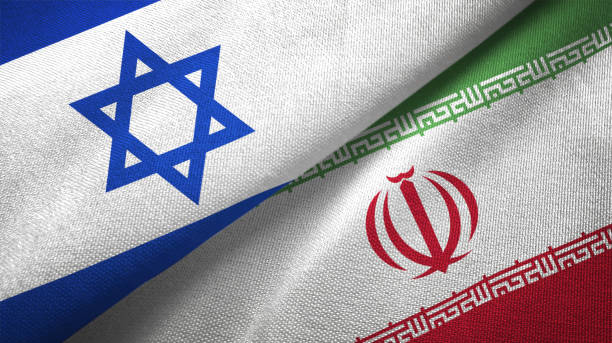
Direct military confrontation between Israel and Iran has intensified markedly since 2024, with Iranian ballistic missile strikes in April and October following Israeli operations against Iranian assets and allied forces across the region. The 0% crowd probability reflects the absence of any active diplomatic channel or stated willingness from either government to negotiate a comprehensive settlement. Iran's Supreme Leader and Israeli leadership have shown no indication of pursuing talks that would constitute a "permanent peace deal" as defined—one explicitly ending military hostilities on a lasting basis rather than a ceasefire or temporary arrangement.
Historical precedent offers limited encouragement. The 1953 CIA-backed coup in Iran created a 26-year rupture in relations; the 1979 revolution entrenched mutual hostility as state doctrine. No Israeli-Arab peace agreement has directly involved Iran, and attempts at regional de-escalation (the 2015 JCPOA nuclear deal) collapsed without resolving the underlying security competition. The Abraham Accords normalised Israeli ties with Gulf states but explicitly excluded Iran, which views these agreements as hostile coalitions.
Catalysts worth monitoring include any shift in US policy following the 2024 election cycle, potential UN-brokered talks, or a major regional conflict that exhausts both parties' appetite for escalation. Reuters reported in October 2024 that indirect talks through intermediaries remained moribund. The 18-month window to May 2026 is tight for reversing four decades of institutional enmity. Traders assessing value should weigh whether the crowd's zero probability adequately prices the tail risk of unexpected diplomatic breakthrough against the structural barriers to negotiation.
Methodology
This page reviews Israel x Iran permanent peace deal by 2026? across five venues. We show live odds for Polymarket-based markets (sourced from the Polygon order book); for other venues we list platform attributes, since the comparable contracts are not exposed via a public API on every venue. Every CTA points at Who Will Win — the application we operate, where you trade directly against the Polymarket order book at 0% fees.
Resolution & payout
At resolution the UMA oracle takes over: a proposer posts the outcome with a bond, any token holder can dispute within two hours. Without dispute the result is accepted and the smart contract distributes USDC instantly.
On Kalshi (CFTC-regulated) resolution runs through their in-house clearing engine in USD. Betfair Exchange settles after match end in the account's local currency. Manifold pays no cash — only its in-platform "mana" currency.
FAQ
- Is this market available outside the US?
- Who Will Win is available in most jurisdictions where Polymarket isn't directly accessible. Polymarket itself is geo-blocked in the US/UK/EU. Always check local regulations.
- How does resolution work?
- Through the UMA Optimistic Oracle on Polygon: a proposer submits the outcome, a two-hour challenge window opens, and USDC payouts settle automatically once the result is final.
- What's the difference between YES and NO shares?
- A YES share pays $1.00 if the event happens, $0 otherwise. A NO share pays $1.00 if the event doesn't happen. The market price between 0¢ and 100¢ is the implied probability.
- What does it cost to trade on Who Will Win?
- Zero. Who Will Win routes every order to the live Polymarket order book; the only cost is the Polygon network fee, typically under $0.01 per transaction.
- How reliable are the quoted odds?
- The YES/NO percentages are the live mid-prices of the Polymarket order book. On deep markets they move every few seconds; on thinner ones you'll see short plateaus.
%22%2F%3E%3Cpath%20d%3D%22M%206%2066%20A%2026%2026%200%200%201%2058%2066%22%20fill%3D%22%23E6B98D%22%20opacity%3D%220.9%22%2F%3E%3Ccircle%20cx%3D%2232%22%20cy%3D%2226%22%20r%3D%2222%22%20fill%3D%22%23F5CBA7%22%2F%3E%3Crect%20x%3D%2214%22%20y%3D%224%22%20width%3D%2236%22%20height%3D%228%22%20rx%3D%224%22%20fill%3D%22%23facc15%22%2F%3E%3C%2Fsvg%3E) and
and%22%2F%3E%3Cpath%20d%3D%22M%206%2066%20A%2026%2026%200%200%201%2058%2066%22%20fill%3D%22%23E6B98D%22%20opacity%3D%220.9%22%2F%3E%3Ccircle%20cx%3D%2232%22%20cy%3D%2226%22%20r%3D%2222%22%20fill%3D%22%23F5CBA7%22%2F%3E%3Crect%20x%3D%2210%22%20y%3D%224%22%20width%3D%2244%22%20height%3D%2214%22%20rx%3D%227%22%20fill%3D%22%23facc15%22%20opacity%3D%220.9%22%2F%3E%3Crect%20x%3D%228%22%20%20y%3D%2218%22%20width%3D%228%22%20%20height%3D%2218%22%20rx%3D%224%22%20fill%3D%22%23facc15%22%20opacity%3D%220.7%22%2F%3E%3Crect%20x%3D%2248%22%20y%3D%2218%22%20width%3D%228%22%20%20height%3D%2218%22%20rx%3D%224%22%20fill%3D%22%23facc15%22%20opacity%3D%220.7%22%2F%3E%3C%2Fsvg%3E)
Trade Israel x Iran permanent peace deal by 2026? on Who Will Win
Live order book, 0% fees, USDC settlement in seconds.
Trade on Who Will Win →