Platform comparison
| Platform | YES odds | NO odds | Fee | KYC | Settlement | |
|---|---|---|---|---|---|---|
Who Will Win Pick polygram.ink |
0% | 100% | 0% (USDC on-chain) | No-KYC up to $1,500 | USDC, auto via UMA oracle | Open on Who Will Win → |
Polymarket polymarket.com |
0% | 100% | 0% | Geo-blocked in US/UK/EU | USDC, on-chain | Open on Who Will Win → |
Kalshi kalshi.com |
— | — | Up to 7% per trade | US-only, KYC required | USD | Open on Who Will Win → |
Betfair Exchange betfair.com |
— | — | 2-5% commission | Full KYC from first trade | GBP / EUR | Open on Who Will Win → |
Manifold Markets manifold.markets |
— | — | Play-money (mana) | None — play-money | Mana (no cash-out) | Open on Who Will Win → |
Live odds for Polymarket-based markets come from the Polygon order book. Non-Polymarket venues show attributes only; clicking any row opens the market on Who Will Win.
Active sub-markets
Market context
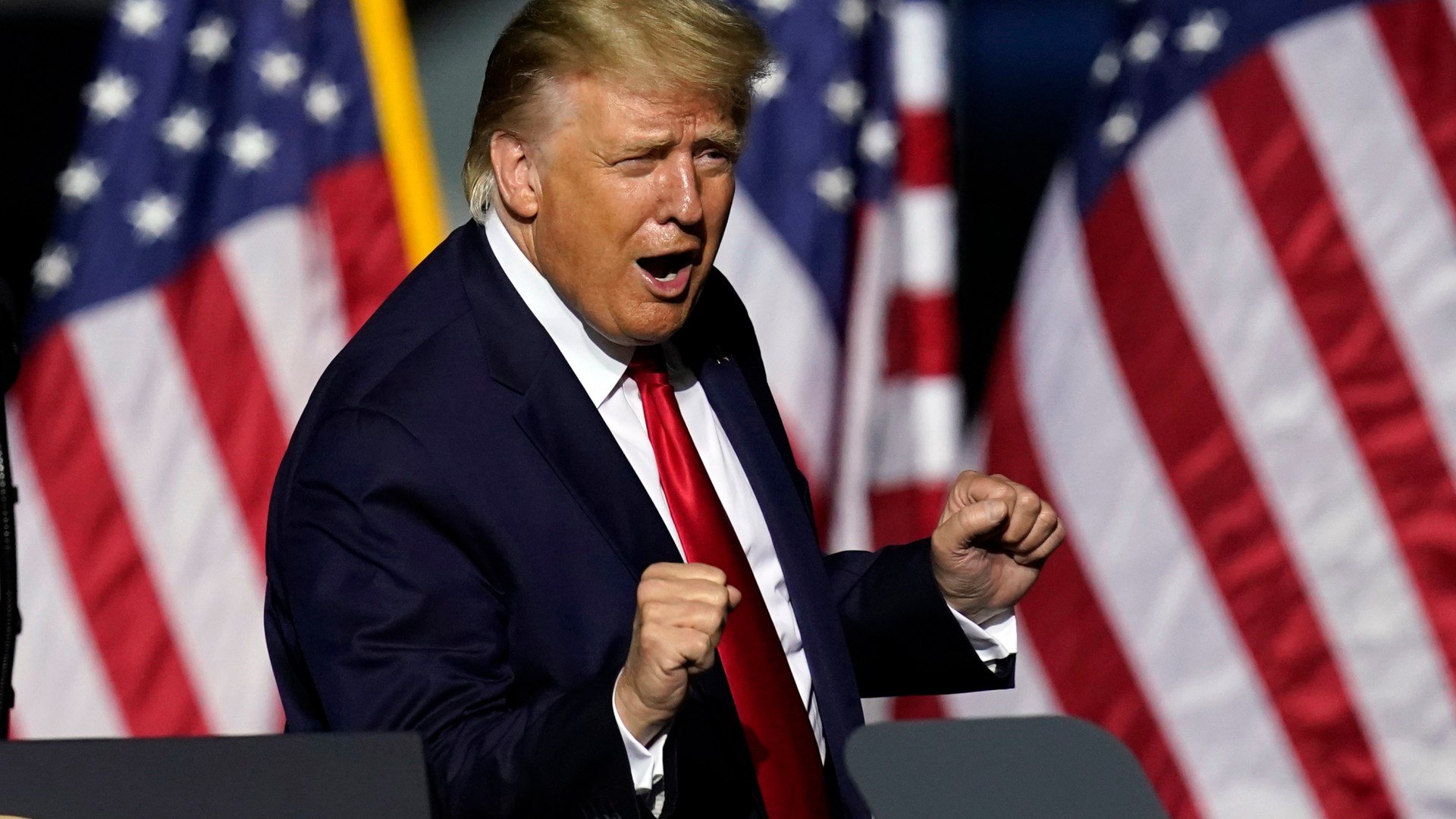
The market hinges on whether Donald Trump will be filmed dancing—defined as deliberate, rhythmic body movement matched to music or beat—on a single specified date between now and 31 May 2026. The resolution requires unaltered footage posted to his social media or captured by credible sources; deepfakes and AI-generated content are explicitly excluded. The current crowd probability sits at 0%, suggesting near-universal scepticism that such footage will emerge on the target date.
Historical precedent offers limited direct comparison, though Trump's public appearances over the past decade show occasional instances of rhythmic movement at rallies and events—most notably a brief sway to the Village People's "YMCA" at campaign stops. However, these moments have been rare and typically brief, occurring in specific contexts rather than as deliberate dance performances. The 0% probability reflects both the low baseline frequency of such behaviour and the specificity of the settlement window: a single 24-hour period creates a narrow target that requires both opportunity and inclination to align.
Catalysts to monitor include Trump's scheduled public events, rally appearances, and any announced performances or entertainment-focused gatherings during the settlement window. Campaign schedules and media coverage of his activities will signal whether conditions favour the outcome. The extended timeframe to May 2026 allows for substantial schedule changes, but the requirement for authentic, unaltered footage on a precise date remains the binding constraint. Traders should assess whether the implied 0% reflects genuine impossibility or undervalues the probability given Trump's unpredictability in public settings.
Methodology
This page reviews Will Trump dance on 2026? across five venues. We show live odds for Polymarket-based markets (sourced from the Polygon order book); for other venues we list platform attributes, since the comparable contracts are not exposed via a public API on every venue. Every CTA points at Who Will Win — the application we operate, where you trade directly against the Polymarket order book at 0% fees.
Resolution & payout
At resolution the UMA oracle takes over: a proposer posts the outcome with a bond, any token holder can dispute within two hours. Without dispute the result is accepted and the smart contract distributes USDC instantly.
On Kalshi (CFTC-regulated) resolution runs through their in-house clearing engine in USD. Betfair Exchange settles after match end in the account's local currency. Manifold pays no cash — only its in-platform "mana" currency.
FAQ
- How does resolution work?
- Through the UMA Optimistic Oracle on Polygon: a proposer submits the outcome, a two-hour challenge window opens, and USDC payouts settle automatically once the result is final.
- What's the difference between YES and NO shares?
- A YES share pays $1.00 if the event happens, $0 otherwise. A NO share pays $1.00 if the event doesn't happen. The market price between 0¢ and 100¢ is the implied probability.
- What does it cost to trade on Who Will Win?
- Zero. Who Will Win routes every order to the live Polymarket order book; the only cost is the Polygon network fee, typically under $0.01 per transaction.
- How fast are USDC deposits?
- Polygon credits deposits after 12 confirmations — usually under 30 seconds. Withdrawals follow the same path and land back in your wallet within minutes.
- How reliable are the quoted odds?
- The YES/NO percentages are the live mid-prices of the Polymarket order book. On deep markets they move every few seconds; on thinner ones you'll see short plateaus.
%22%2F%3E%3Cpath%20d%3D%22M%206%2066%20A%2026%2026%200%200%201%2058%2066%22%20fill%3D%22%23E6B98D%22%20opacity%3D%220.9%22%2F%3E%3Ccircle%20cx%3D%2232%22%20cy%3D%2226%22%20r%3D%2222%22%20fill%3D%22%23F5CBA7%22%2F%3E%3Crect%20x%3D%2214%22%20y%3D%224%22%20width%3D%2236%22%20height%3D%228%22%20rx%3D%224%22%20fill%3D%22%23facc15%22%2F%3E%3C%2Fsvg%3E) and
and%22%2F%3E%3Cpath%20d%3D%22M%206%2066%20A%2026%2026%200%200%201%2058%2066%22%20fill%3D%22%23E6B98D%22%20opacity%3D%220.9%22%2F%3E%3Ccircle%20cx%3D%2232%22%20cy%3D%2226%22%20r%3D%2222%22%20fill%3D%22%23F5CBA7%22%2F%3E%3Crect%20x%3D%2210%22%20y%3D%224%22%20width%3D%2244%22%20height%3D%2214%22%20rx%3D%227%22%20fill%3D%22%23facc15%22%20opacity%3D%220.9%22%2F%3E%3Crect%20x%3D%228%22%20%20y%3D%2218%22%20width%3D%228%22%20%20height%3D%2218%22%20rx%3D%224%22%20fill%3D%22%23facc15%22%20opacity%3D%220.7%22%2F%3E%3Crect%20x%3D%2248%22%20y%3D%2218%22%20width%3D%228%22%20%20height%3D%2218%22%20rx%3D%224%22%20fill%3D%22%23facc15%22%20opacity%3D%220.7%22%2F%3E%3C%2Fsvg%3E)
Trade Will Trump dance on 2026? on Who Will Win
Live order book, 0% fees, USDC settlement in seconds.
Trade on Who Will Win →