Platform comparison
| Platform | YES odds | NO odds | Fee | KYC | Settlement | |
|---|---|---|---|---|---|---|
Polymarket (via Who Will Win) Pick polygram.ink (preferred broker) |
100% | 0% | 0% (USDC on-chain) | No-KYC up to $1,500 | USDC, auto via UMA oracle | Live odds → |
Polymarket (direct) polymarket.com |
100% | 0% | 0% | Geo-blocked in US/UK/EU | USDC, on-chain | Live odds → |
Kalshi kalshi.com |
— | — | Up to 7% per trade | US-only, KYC required | USD | Live odds → |
Betfair Exchange betfair.com |
— | — | 2-5% commission | Full KYC from first trade | GBP / EUR | Live odds → |
Manifold Markets manifold.markets |
— | — | Play-money (mana) | None — play-money | Mana (no cash-out) | Live odds → |
Outcome probabilities
Current market-implied probability for each outcome, from the live order book.
| Outcome | Probability |
|---|---|
| July 18 | 100% |
| July 20 | 100% |
| July 22 | 100% |
| July 23 | 99% |
| July 24 | 95% |
| July 25 | 76% |
| July 26 | 68% |
| July 31 | 56% |
| August 15 | 35% |
| August 31 | 28% |
Market context
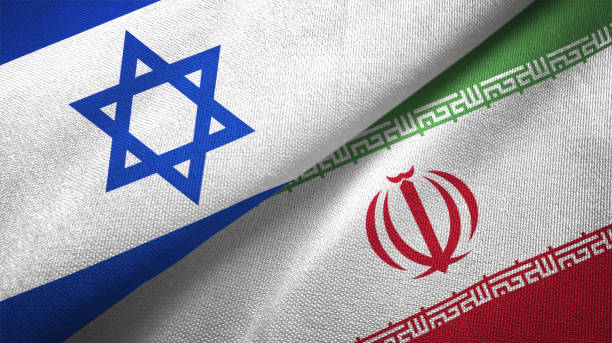
Iran and Israel are in a fragile stand-down, but the market is pricing a **100% YES** outcome, so the favourite is overwhelming and the question is whether any late strike breaks the truce before August 2026. The settlement rule is narrow: a qualifying air strike or surface-to-surface missile strike from either side that directly hits the other country is enough to flip the result, so traders are really betting on no escalation rather than on a broad diplomatic settlement.
The closest comparable cases suggest caution on overconfidence. Earlier ceasefires around this conflict have shown that even when leaders announce a halt, the first hours and days can still produce violations, with Israel and Iran continuing exchanges of fire after the April ceasefire was declared, before the shooting later stopped.[8] A June report also noted that Israel had paused attacks on Iran at Washington’s request while making clear that operations in Lebanon could continue, which is relevant because side theatres have repeatedly complicated truce management.[5][1] That makes the consensus instinct understandable, but a 100% price leaves essentially no room for residual tail risk.
The main catalysts are political signalling and any resumed military timetable. Watch for Israeli cabinet statements, Iranian Revolutionary Guard rhetoric, US mediation updates, and whether regional alerts or intercepts start to look like pre-attack positioning. Reuters and other wire services have repeatedly treated ceasefire status as contingent on both sides refraining from direct strikes, and recent coverage has shown how quickly public messaging can diverge from operational intent.[1][3] In handicapper terms, the market’s consensus is that the ceasefire is the base case; the only real value angle is contrarian exposure to a surprise missile or air strike, but that is a low-probability tail event given the current stand-down.
Methodology
Methodologically we separate two layers: the live probability (Polymarket mid-price) and the platform attributes (fee, KYC, settlement currency, payment rails). That keeps the comparison honest — a single canonical probability across the row, with the venue-by-venue trade-offs spelt out in the columns next to it.
Resolution & payout
At resolution the UMA oracle takes over: a proposer posts the outcome with a bond, any token holder can dispute within two hours. Without dispute the result is accepted and the smart contract distributes USDC instantly.
On Kalshi (CFTC-regulated) resolution runs through their in-house clearing engine in USD. Betfair Exchange settles after match end in the account's local currency. Manifold pays no cash — only its in-platform "mana" currency.
FAQ
- How does resolution work?
- Through the UMA Optimistic Oracle on Polygon: a proposer submits the outcome, a two-hour challenge window opens, and USDC payouts settle automatically once the result is final.
- What does Polymarket cost to trade?
- Polymarket itself charges 0% — the only cost is the Polygon network fee, typically under $0.01 per transaction. Off-chain venues like Kalshi or Betfair charge 2-7% commission.
- How fast are USDC deposits?
- Polygon credits deposits after 12 confirmations — usually under 30 seconds. Withdrawals follow the same path and land back in your wallet within minutes.
- Do I need to KYC for this market?
- On Polymarket directly, no — it's wallet-based. Intermediary brokers like Who Will Win trigger KYC only above $1,500 of lifetime trading volume; under that you trade pseudonymously with a single wallet address.
- How reliable are the quoted odds?
- The YES/NO percentages are the live mid-prices of the Polymarket order book. On deep markets they move every few seconds; on thinner ones you'll see short plateaus.
%22%2F%3E%3Cpath%20d%3D%22M%206%2066%20A%2026%2026%200%200%201%2058%2066%22%20fill%3D%22%23E6B98D%22%20opacity%3D%220.9%22%2F%3E%3Ccircle%20cx%3D%2232%22%20cy%3D%2226%22%20r%3D%2222%22%20fill%3D%22%23F5CBA7%22%2F%3E%3Crect%20x%3D%2214%22%20y%3D%224%22%20width%3D%2236%22%20height%3D%228%22%20rx%3D%224%22%20fill%3D%22%23facc15%22%2F%3E%3C%2Fsvg%3E) and
and%22%2F%3E%3Cpath%20d%3D%22M%206%2066%20A%2026%2026%200%200%201%2058%2066%22%20fill%3D%22%23E6B98D%22%20opacity%3D%220.9%22%2F%3E%3Ccircle%20cx%3D%2232%22%20cy%3D%2226%22%20r%3D%2222%22%20fill%3D%22%23F5CBA7%22%2F%3E%3Crect%20x%3D%2210%22%20y%3D%224%22%20width%3D%2244%22%20height%3D%2214%22%20rx%3D%227%22%20fill%3D%22%23facc15%22%20opacity%3D%220.9%22%2F%3E%3Crect%20x%3D%228%22%20%20y%3D%2218%22%20width%3D%228%22%20%20height%3D%2218%22%20rx%3D%224%22%20fill%3D%22%23facc15%22%20opacity%3D%220.7%22%2F%3E%3Crect%20x%3D%2248%22%20y%3D%2218%22%20width%3D%228%22%20%20height%3D%2218%22%20rx%3D%224%22%20fill%3D%22%23facc15%22%20opacity%3D%220.7%22%2F%3E%3C%2Fsvg%3E)
Trade Israel x Iran ceasefire continues through 2026? on Who Will Win
Live order book, 0% fees, USDC settlement in seconds.
Open live market →